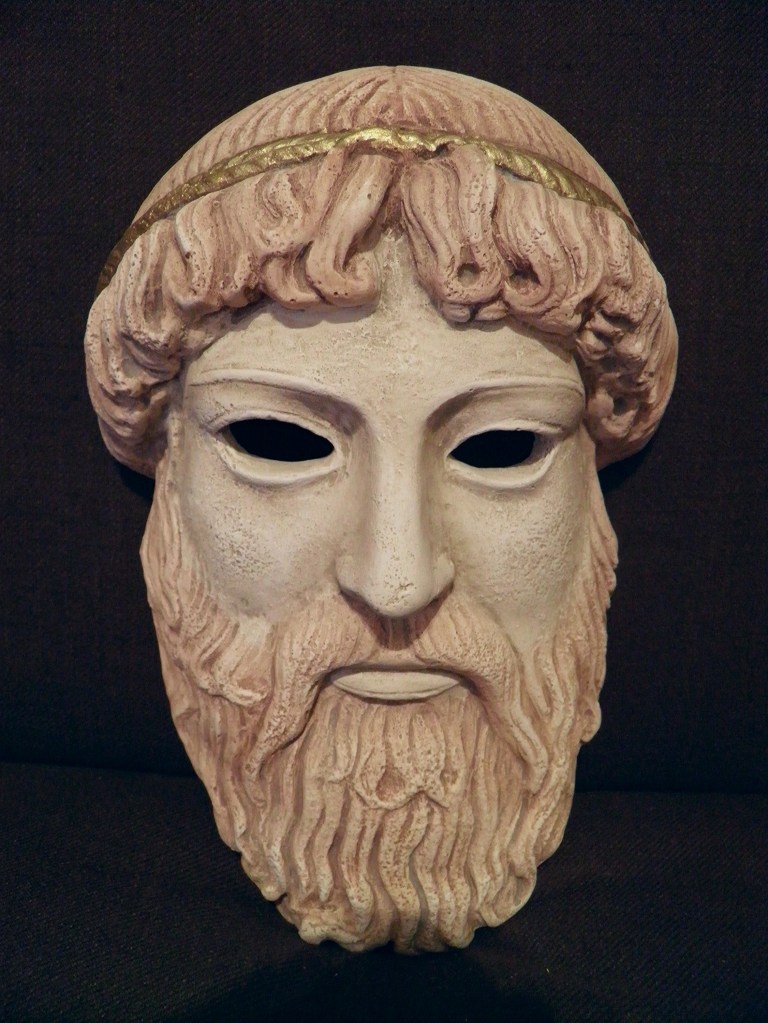
What’s the point of a roleplaying game? At some point in 1993 to 1995, I was convinced, along with I assumed my friends, that I knew the point of RPGs. It was: catharsis. When I was first introduced to the term, I had no idea what it meant, and it wouldn’t be till 1995 and Year 11 that I learned about Greek Tragedy in Ancient History. In practice it meant that games should create some kind of traumatic or challenging emotional reaction in players – traumatic enough that it leads the players to some kind of realisation about themselves, life, society etc. The point of RPGS was to make sure the players had a bad time. This would be: a) fun b) important c) ART.
In practice this meant adventures based on challenging or difficult subject matter, where the characters were either compromised, doomed or both and that success was some form of suffering. A favourite example, I’m not sure if it was ever played or only discussed, was a game where, based on Nick Cave and The Bad Seed’s Mercy Seat, the characters were various parts of a human soul trying to find redemption within the mind of a condemned murdered on an electric chair.
It all seems very ridiculous now, but it is an insight into how games, which are an artifice of the imagination, draw on the broader cultural context of their time. And how much this has changed.
I played a game at convention based on the timeline established by Robert Harris’ Fatherland where Nazi Germany had won WWII. Set in the 21st Century we played Waffen SS soldiers fighting the last Soviet resistance across a nuclear wasteland. It was a decidedly anti-fascist game where the disjunction between the players’ morality and the characters’ world and actions caused an emotional and intellectual critique of fascism. This was in the context of a popular and alternative culture where, except for explicitly neo-Nazi scenes, performing aspects of fascism was almost intuitively read as a critique of fascism ala Laibach. Hard to imagine that now really…
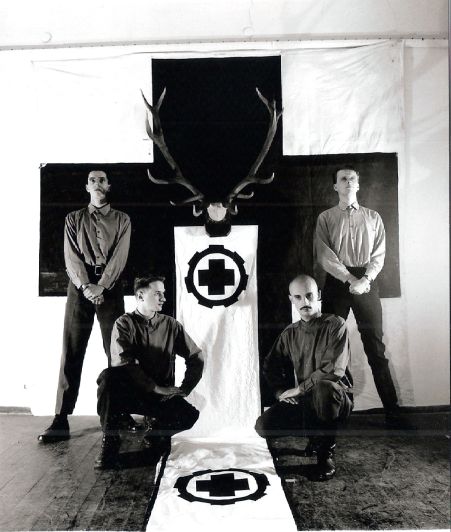
Gruppe LAIBACH, Pressefoto 1983, CC BY-SA 3.0 https://creativecommons.org/licenses/by-sa/3.0/deed.en
The role-playing scene that produced this focus on games aimed at catharsis was both a local and global phenomenon. This was the same epoch as Vampire The Masquerade/ World of Darkness, Kult etc. The RPG world that I experienced was based around university clubs, at a time when students had lots of time, campus were a thriving environment of culture, art and politics, and welfare was, compared in retrospect to now, far more lenient and you could have a pretty good time on not much money (also lattes in a glass with a stem, handle on the side and covered with a servette! Paired perfectly with a focaccia and/or sweet potato wedges, sour cream, and sweet chilli sauce …). The alternative cultures reflected on campus then brewed through into games.
The fecund cookpot of all of this were the many regular conventions, accompanied as they were with house parties and last night drinks at the British Lion Pub in Glebe. Conventions in Sydney were famous for running a lot of games that were effectively ‘systemless’ – something I think that is continued by Canberra’s Phenomenon convention.
This all meant that to be into games, the cool games, which were about catharsis, you also had to be into music, art, comics, comedy, a bit of philosophy and at least pretend you had read books. You weren’t some awful AD&D 2ed. playing moron – you were an artist at the edge of human experience.
I suspect though many games, like all games that attempt to be dark, serious, and challenging, were in practice probably just silly. And so too there was a counter-tendency, a drive to make daft and ridiculous games that poked their tongue out at the po-faced nature of serious and dark games. I can’t remember it but there is a trophy on my shelf (yes RPG conventions use to give out trophies, the awards ceremonies being in themselves a moment of absurd improvised theatre) for a game about Gummy Bears and one of the best games I can remember involved us playing broken shopping trolleys trying to get back to Woolies and a big cardboard cutout of Shane Warne.
Today I would never run a game focused on catharsis – for one it is far too rail-roady. Not only does the GM want to determine the narrative of the adventure but the players emotional experiences too! Also, as I left the world of RPGs (and didn’t return for 20 years) and entered the lecture theatres of university I learned that how an audience understands a work is always a step removed from an author or film maker’s intent and, like language and meaning, is somewhat arbitrary. Trying to pre-determine how players feel about a game is folly – and it is indeed the arbitrary nature of meaning in RPGs which is now far more exciting to me that trying to make sure everyone feels upset.
Also, culturally the context is completely different. The RPG scene of the 90s was expressing, consciously or unconsciously, the last wave of 20th Century Modernism where shock was considered an important part of art and emancipatory too (Dada, Fluxus, punk etc). Now those doing interesting things in RPGs are probably more concerned with care and ensuring that games are emotionally and physically safe – with new sets of safety tools and cultures of play growing to support this. (Players of Bluebeard’s Bride I seek your opinion!)
My point isn’t to celebrate the past or the present, to say one if better or worse, but rather that to mark the cultural transformations which we game within. These different discourses of play allow somethings and disallow others, create ways of speaking and ellipses of silence and we may like and dislike different elements of them – they sit within the broader culture of the times. And culture itself is product and reproducer of the deeper social structures – and the related attempts to change them.
When we sit down at a table – we bring a lot with us. If we reflect on the games we play, what we imagine together, we learn a lot about all of this.
Oh, by the way I now do know what the point of RPGS is – collective joy.


Leave a Reply